
Specialty Field Profile
Carpet Beetle
Dermestidae
Order Coleoptera / Family Dermestidae
Carpet beetle identification should focus on larvae and food source, not just the adult beetle at a window. Adults often wander toward light after developing somewhere else; the damage comes from larvae feeding in quiet lint, hair, fabric, or stored-material zones.
Field ID Snapshot
Carpet Beetle identification starts with place and timing.
Use body traits, activity pattern, location, and season together before calling it Carpet Beetle. One clue by itself is rarely enough for confident identification.
Larvae and feeding damage are more meaningful than one adult beetle at a window.
Adults often appear on windowsills after developing in a hidden source.
Wool, hair, fur, feathers, dead insects, lint, and soiled fabrics can support larvae.
Larval skins, damaged fibers, and debris pockets are stronger evidence than scattered adults.
Closets, rug edges, baseboards, vents, storage boxes, and pet resting areas deserve close inspection.
Carpet beetle larvae can be found near beds but do not behave like bed bugs or feed on blood.
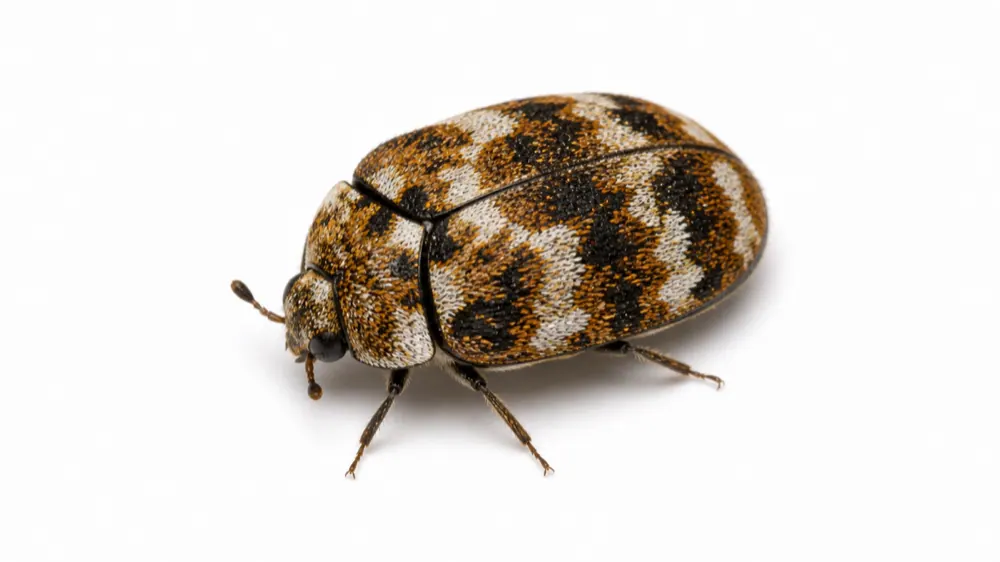 Macro view
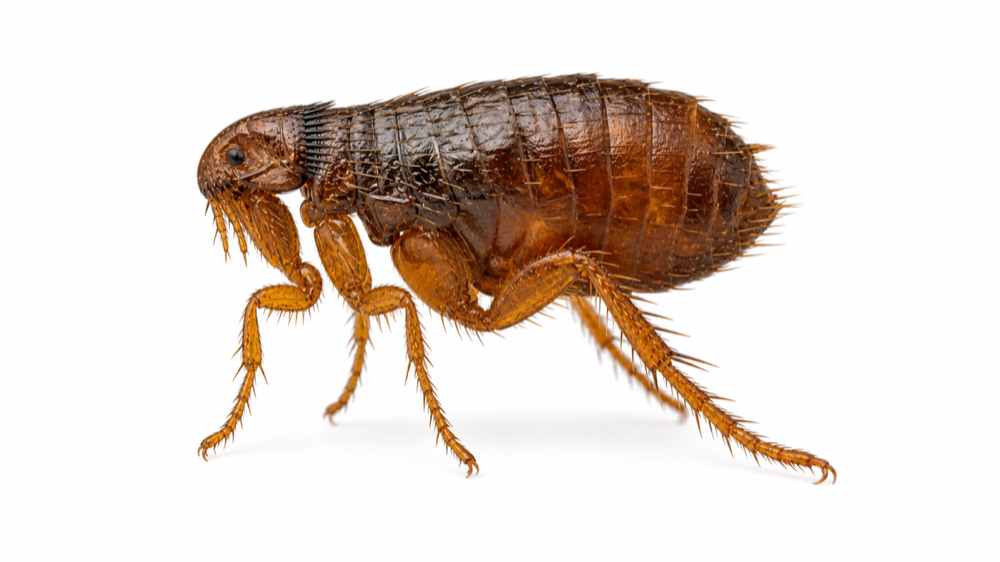
Macro viewStart with the actual specimen.
Use the macro photo to slow the identification down: body shape, proportions, color pattern, and visible structures should match before the location clues are weighed.
Field evidenceField evidenceThen match the source pattern.
The strongest ID pairs small beetles and bristly fabric-feeding larvae with a source that makes sense: closets, rugs, wool, pet hair, lint, dead insects, and stored fabrics. Then compare against bed bugs, clothes moths, and pantry beetles; a better match should shift the identification.
Clues that make carpet beetle more likely.
- Bristly larvae, shed larval skins, or irregular feeding damage near wool, rugs, stored fabrics, pet hair, lint, or dead insects support the ID.
- Adults collecting on windows can point back to a hidden larval source elsewhere in the room or structure.
- Activity near closets, baseboards, vents, rugs, taxidermy, or stored textiles fits carpet beetle biology.
- Finding larvae plus a food material is stronger evidence than finding one adult beetle.
Clues that point away from carpet beetle.
- Blood spotting, live bugs, eggs, or cast skins near sleeping areas point toward bed bugs instead.
- Small buff moths and webbing in wool or stored fabrics may indicate clothes moths.
- Tiny beetles in spices, grain, pet food, or pantry packages point toward stored-product beetles.
- No larvae, skins, damage, or source material weakens a carpet beetle diagnosis.
Lookalike Comparison
Pests that overlap with Carpet Beetle.
Moisture, storage, lights, season, and entry points often explain these pests better than the sighting alone.
Biology And Behavior
Carpet Beetle behavior explains the stored-product or fabric pest pressure.
Dermestid larvae feed on animal-based materials and debris: wool, fur, feathers, pet hair, lint, dead insects, taxidermy, and soiled natural fibers. Control is a source-finding and cleaning problem as much as an insect treatment problem.
Specimen ReferenceCarpet BeetleDermestidae
Larvae do the damage and feed where animal-based material or debris accumulates.
Adults may be noticed at windows even when the larval source is in a closet, vent, attic, or baseboard edge.
Vacuuming, laundering, storage correction, and source disposal are central to long-term control.
Nesting, Habitat, And Food
Where Carpet Beetle conditions usually hold.
Start with wool, rugs, stored clothing, blankets, upholstery, and natural fibers.
Baseboards, vents, pet resting areas, and furniture edges can collect larval food.
Attics, wall void edges, light fixtures, and storage boxes can support beetles before adults appear.
Seasonal Activity
When Carpet Beetle is most likely to appear.
Carpet beetles can be noticed year-round indoors. Adult window activity may become obvious during warmer periods, but larval feeding depends on hidden food material and storage conditions.
Activity WindowYear-round
JanFebMarAprMayJunJulAugSepOctNovDec
Control Logic
How a technician traces Carpet Beetle to the source.
Good carpet beetle control starts by finding the larval food source. Treating adult beetles at windows without cleaning or removing the source usually misses the problem.
Tie the sighting to moisture, light, or season.
- Look for larvae, shed skins, and damage before assuming adult beetles are the full issue.
- Vacuum baseboards, rug edges, closets, vents, pet hair, and lint-heavy areas thoroughly.
- Launder, dry clean, freeze, or discard infested fabric or animal-based materials when appropriate.
- Store wool, fur, feathers, and natural fibers clean and sealed after the source is corrected.
Why conditions matter more than the single insect.
- Confirm dermestid larvae and separate carpet beetles from bed bugs, clothes moths, and pantry beetles.
- Trace adults at windows back to larval food sources in fabrics, lint, hair, dead insects, or storage.
- Pair crack-and-edge treatment with cleaning, source removal, and storage recommendations.
- Reinspect source zones rather than judging success by one or two wandering adults.
Keep Comparing
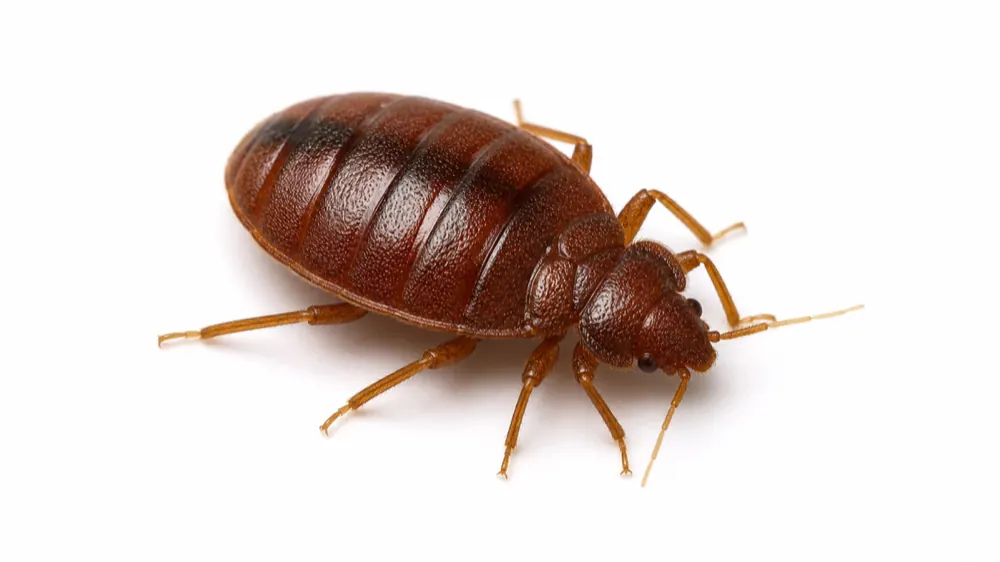
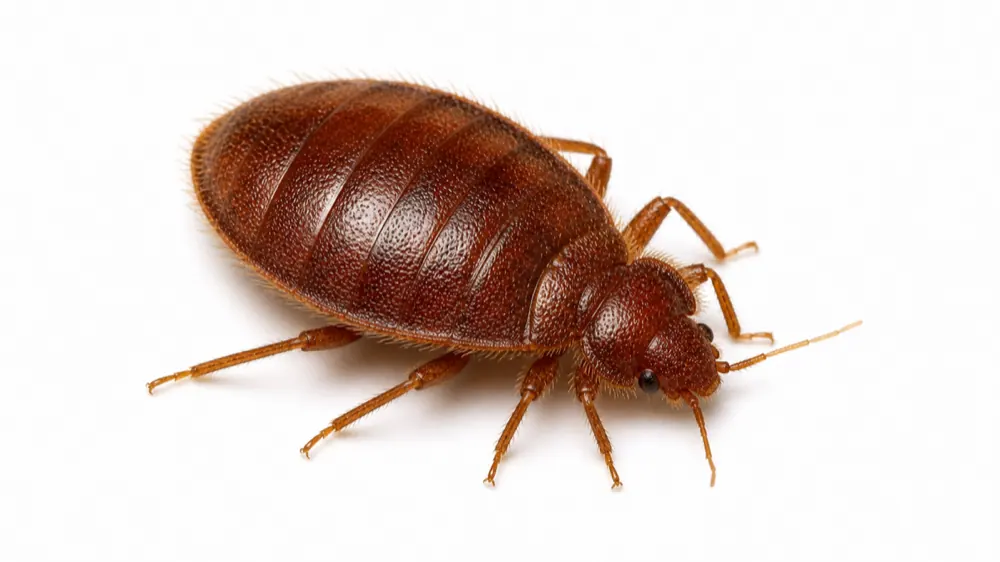
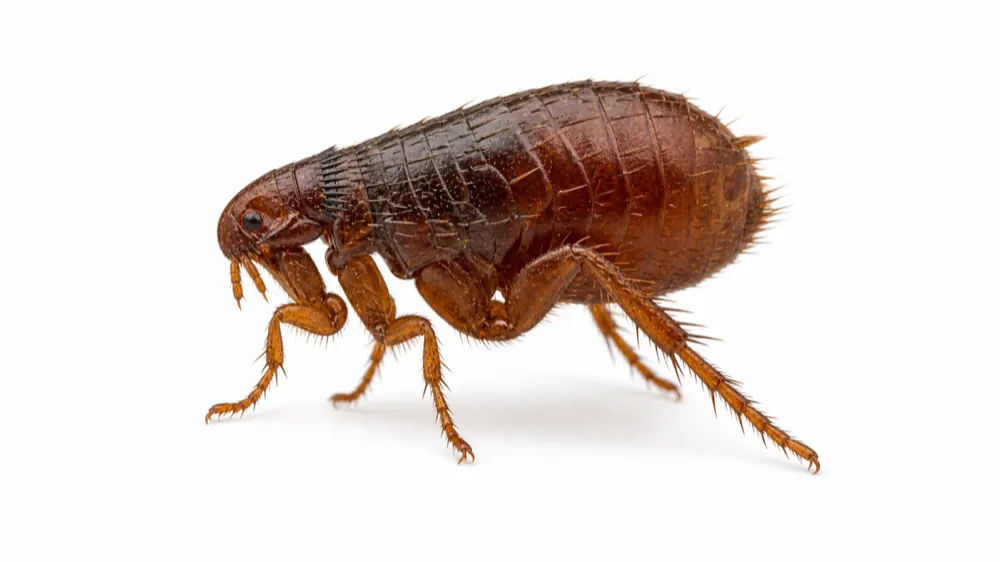
Profiles to compare with Carpet Beetle.
Sources & Further Reading
References used for this Carpet Beetle profile.
These references support identification, seasonal movement, and prevention notes.
Reference 01NC State Fabric Pests
Clothes moth and carpet beetle identification and fabric-source guidance.
Reference 02University of Maryland Carpet BeetlesCarpet beetle larvae, feeding materials, and storage prevention.
Reference 03Purdue Extension Fabric PestsClothes moth and carpet beetle control and prevention reference.
Reference 04BugGuide reference searchTaxonomy, range, and field-image reference search for Carpet Beetle.
Need Confirmation?
Not sure if this is Carpet Beetle?
Where it appeared, the season, and whether more keep showing up are the most useful clues.