
Roaches Field Profile
German Cockroach
Blattella germanica
Order Blattodea / Family Ectobiidae / Blattella germanica
German cockroaches are the indoor roach that changes the urgency of a service call. They live close to people, reproduce quickly, hide in tight warm cracks, and turn kitchens, bathrooms, appliances, and shared walls into connected habitat.
Field ID Snapshot
German Cockroach identification starts with species and room.
Confirm German cockroaches by size, the two dark stripes behind the head, indoor warm/moist harborage, and mixed life stages. One adult near a kitchen is more serious than one large outdoor roach in a basement.
Adults are about one-half inch long, much smaller than American or Oriental roaches.
Two lengthwise dark bands behind the head are the classic adult field mark.
Nymphs are small, fast, and usually found close to food, heat, and moisture.
Females carry the ootheca until close to hatch, which helps populations build fast.
Appliances, hinges, sink voids, counters, warm motors, and shared walls are high-value zones.
This species can complete its life cycle inside and does not require an outdoor source.
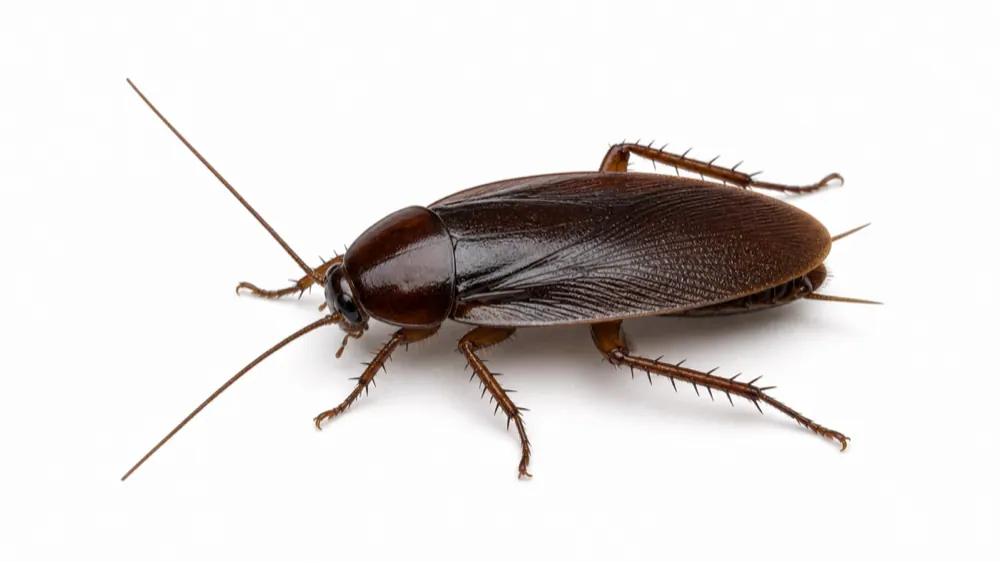
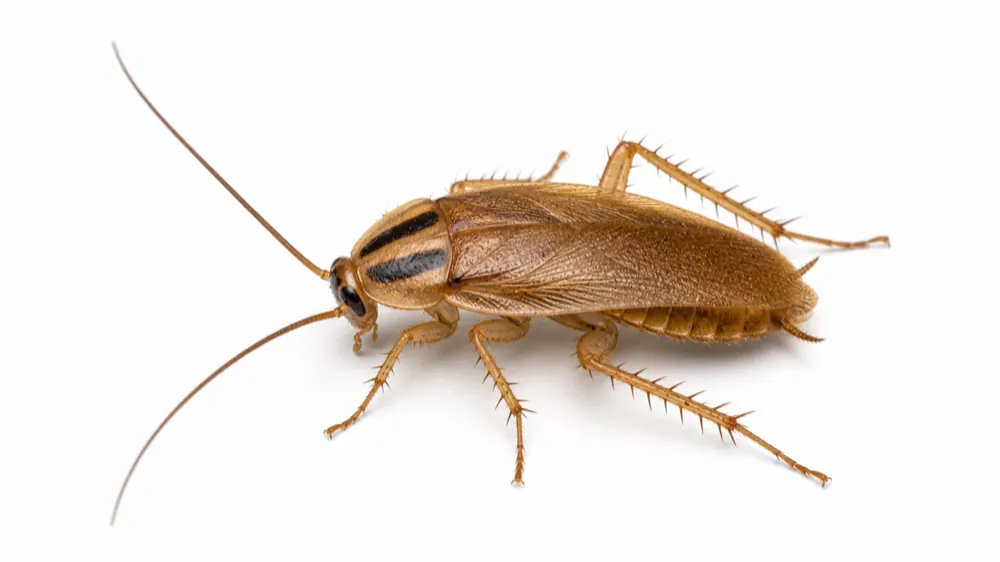 Macro view
Macro viewStart with the actual specimen.
Use the macro photo to slow the identification down: body shape, proportions, color pattern, and visible structures should match before the location clues are weighed.
Field evidenceField evidenceThen match the source pattern.
The strongest ID pairs small indoor roach with a source that makes sense: kitchens, bathrooms, apartments. Then compare against similar pests in the library; a better match should shift the identification.
Clues that make german cockroach more likely.
- Small tan roaches with two dark stripes behind the head.
- Nymphs, adults, droppings, or egg cases around kitchens, bathrooms, appliances, cabinets, or shared walls.
- Night activity or monitor captures close to food, heat, moisture, and tight cracks.
- Multiple life stages in the same area, which signals indoor reproduction.
Clues that point away from german cockroach.
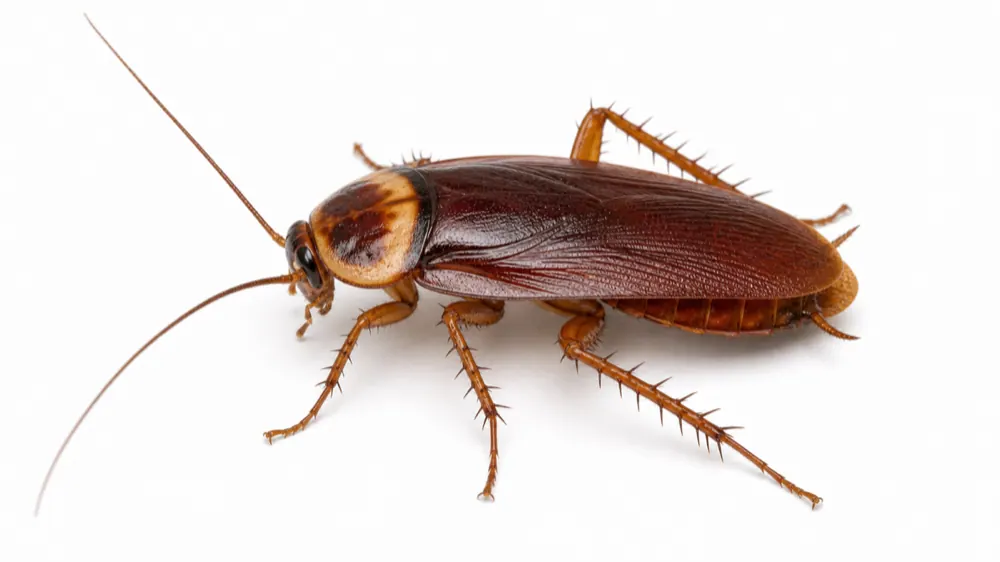
- One large reddish roach from a basement or drain is more likely American cockroach.
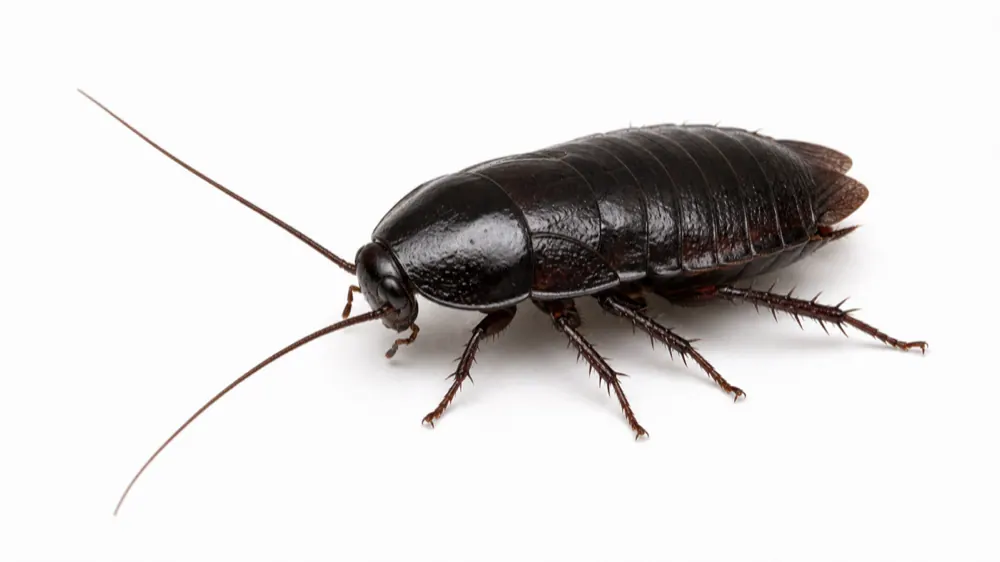
- A shiny black roach in a damp lower level points toward Oriental cockroach.
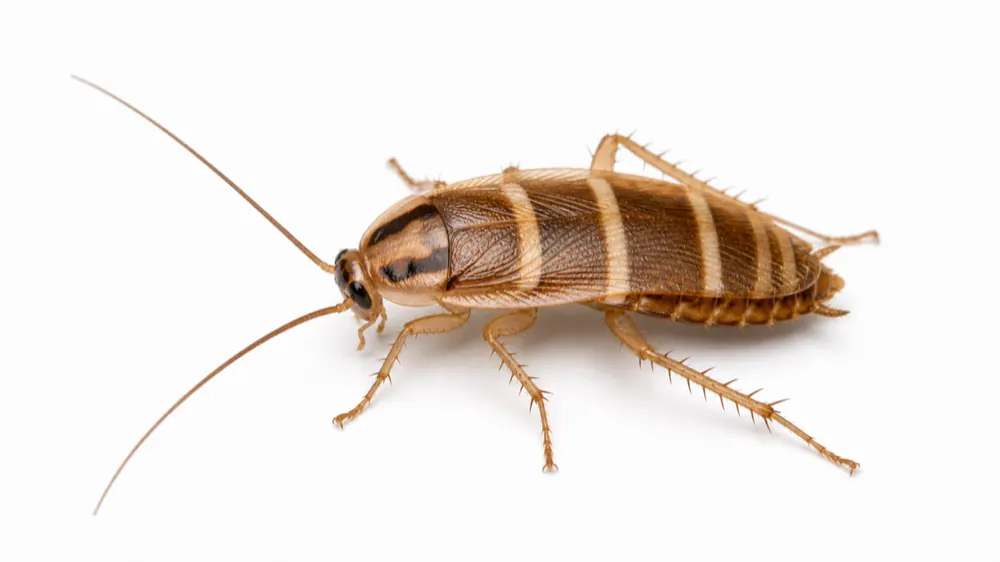
- Light-banded roaches high on walls, bedrooms, or electronics may be brown-banded cockroaches.
- Outdoor wood roaches near lights or firewood do not behave like German roaches indoors.
Lookalike Comparison
Lookalikes to compare with German Cockroach.
Species changes the service plan, especially when kitchen, bath, drain, or exterior pressure is involved.
Biology And Behavior
German cockroach biology is built for indoor population growth.
German cockroaches stay close to food, moisture, heat, and cracks narrow enough to touch their bodies. Their fast reproduction means the visible roaches are usually only a small part of the population hidden inside appliances, cabinetry, and wall edges.
Specimen ReferenceGerman CockroachBlattella germanica
Multiple life stages can be present at once, so one treatment rarely tells the whole story.
The best inspection spots are small, warm, dark, and close to food or water.
Bait, growth regulation, sanitation, crack work, and follow-up need to support each other.
Nesting, Habitat, And Food
Where German Cockroach activity usually starts.
Refrigerators, dishwashers, stoves, sinks, hinges, drawers, and backsplash gaps are priority zones.
Plumbing chases and vanity gaps can support activity away from kitchens.
Activity can move through wall voids, utility penetrations, and neighboring units.
Seasonal Activity
When German Cockroach pressure is most visible locally.
German cockroaches can be active year-round in Cincinnati because they live indoors. Seasonal weather matters less than sanitation, moisture, heat, clutter, and introduction pressure.
Activity WindowYear-round
JanFebMarAprMayJunJulAugSepOctNovDec
Control Logic
How a technician reads German Cockroach activity.
Good German cockroach work requires inspection, sanitation coaching, targeted baits, growth regulators, crack-and-crevice treatment, and follow-up monitoring. Broad spraying can scatter activity and interfere with bait performance.
Confirm the roach before choosing treatment.
- Track where German Cockroach is appearing before treatment.
- Reduce moisture, clutter, food access, or exterior harborage where possible.
- Avoid heavy DIY spray use when identification is uncertain.
- Use the service page or quote form when activity repeats or spreads.
Why roach species changes the whole service path.
- Confirm the German Cockroach identification before choosing products or methods.
- Inspect Kitchens, bathrooms, apartments and surrounding entry routes.
- Match the treatment plan to the source condition, not just visible activity.
- Document recommendations so prevention steps are clear after service.
Keep Comparing
Profiles to compare with German Cockroach.
Sources & Further Reading
German Cockroach references used for this profile.
These references help separate indoor breeders, drain-associated roaches, and exterior invaders.
Reference 01Utah State University Extension
German cockroach identification, harborage, and IPM recommendations.
Reference 02University of Minnesota ExtensionCockroach species comparison, health concerns, and monitoring guidance.
Reference 03Penn State ExtensionCockroach IPM, bait, monitoring, and source-correction guidance.
Reference 04University of Nebraska ExtensionDetailed cockroach identification and management manual.
Need Confirmation?
Need help confirming German Cockroach?
Room location, size, color, and whether activity repeats at night usually point the inspection in the right direction.