
Roaches Field Profile
Smokybrown Cockroach
Periplaneta fuliginosa
Order Blattodea / Family Blattidae / Periplaneta fuliginosa
Smokybrown cockroaches are large, uniformly dark mahogany roaches that need high humidity and often start outdoors. Rooflines, gutters, tree holes, mulch, crawl spaces, attics, soffits, garages, and exterior lighting are often more important than kitchen cabinets.
Field ID Snapshot
Smokybrown Cockroach identification starts with species and room.
Confirm smokybrown cockroaches by uniform dark mahogany color, long wings, strong flight, outdoor humid habitat, and lack of the pale figure-eight marking seen on American cockroaches.
The pronotum is dark and lacks the pale margin of American cockroaches.
Adults are large and fully winged.
Adults can fly and are often attracted to lights at night.
They dry out more readily than some roaches, so humid shelter matters.
Tree holes, mulch, rooflines, gutters, soffits, and crawl spaces fit the source pattern.
Indoor sightings often begin with outdoor harborage or roofline access.
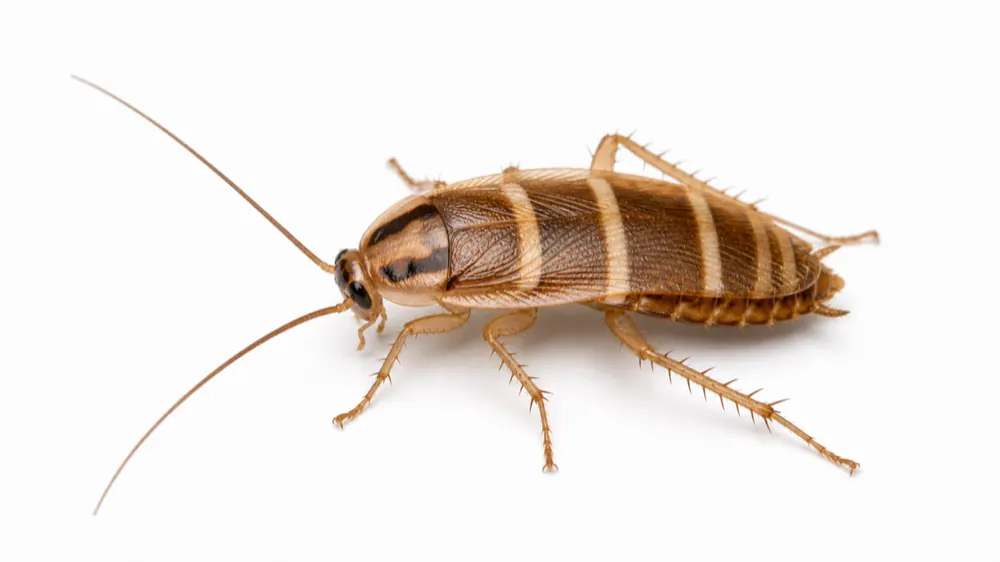
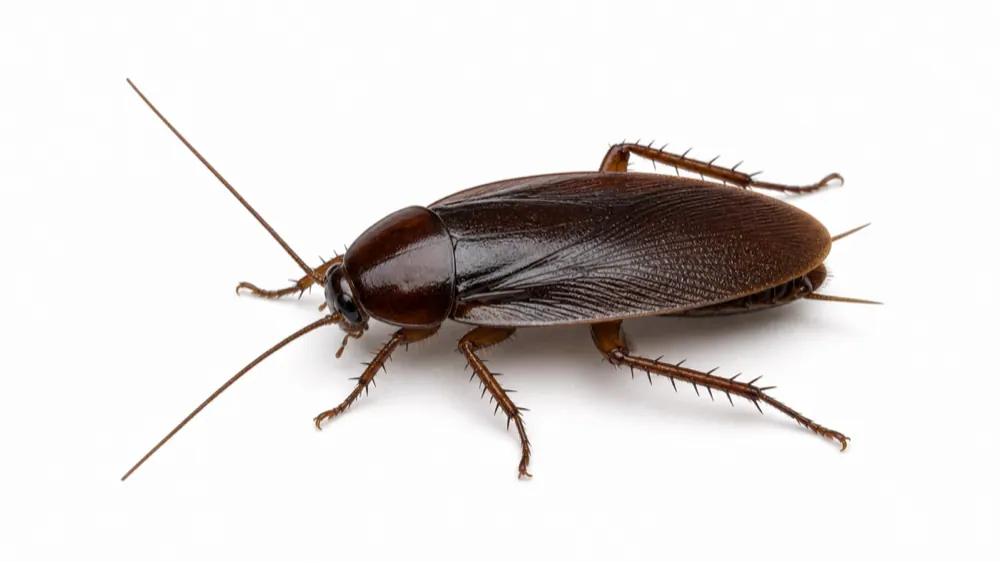 Macro view
Macro viewStart with the actual specimen.
Use the macro photo to slow the identification down: body shape, proportions, color pattern, and visible structures should match before the location clues are weighed.
Field evidenceField evidenceThen match the source pattern.
The strongest ID pairs uniform dark mahogany with a source that makes sense: mulch, rooflines, gutters. Then compare against similar pests in the library; a better match should shift the identification.
Clues that make smokybrown cockroach more likely.
- Large uniformly dark brown or mahogany roaches without a pale American-roach pronotum mark.
- Activity near gutters, rooflines, attics, soffits, tree cover, mulch, garages, or crawl spaces.
- Night attraction to exterior lights or upper-level entry points.
- Humid outdoor harborage close to the structure.
Clues that point away from smokybrown cockroach.
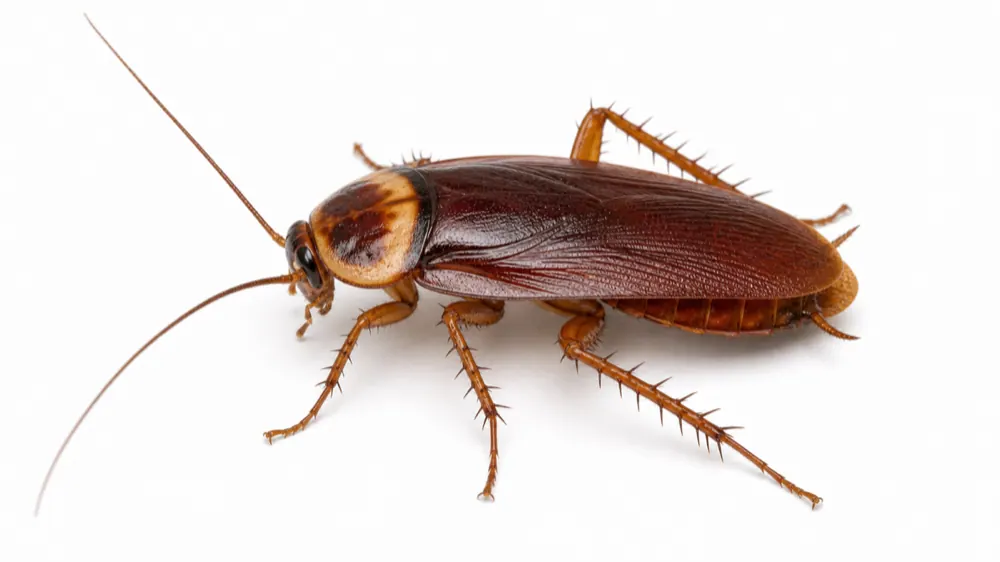
- Reddish-brown roaches with a pale figure-eight marking point toward American cockroaches.
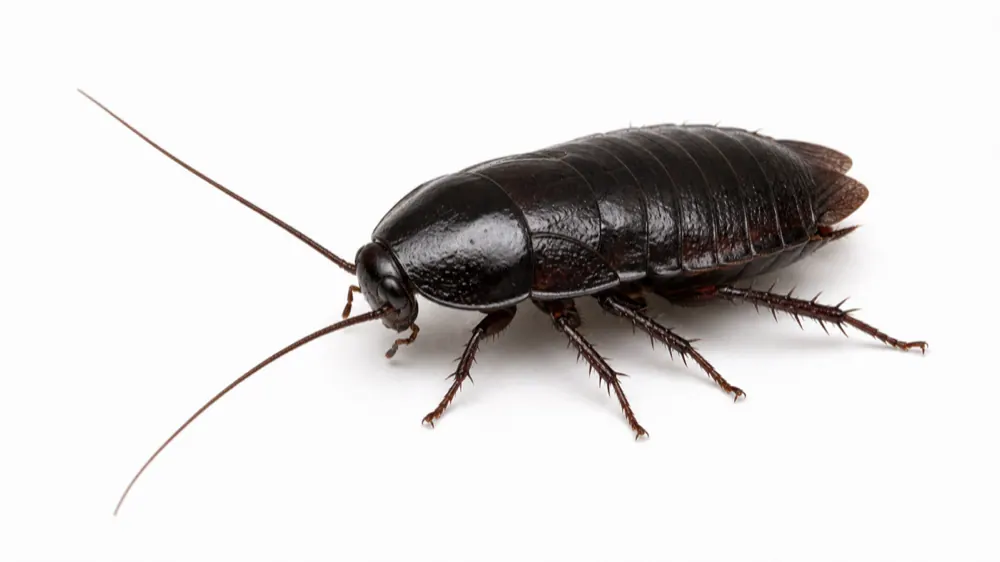
- Dark shiny roaches in cool damp basements or drains point toward Oriental cockroaches.
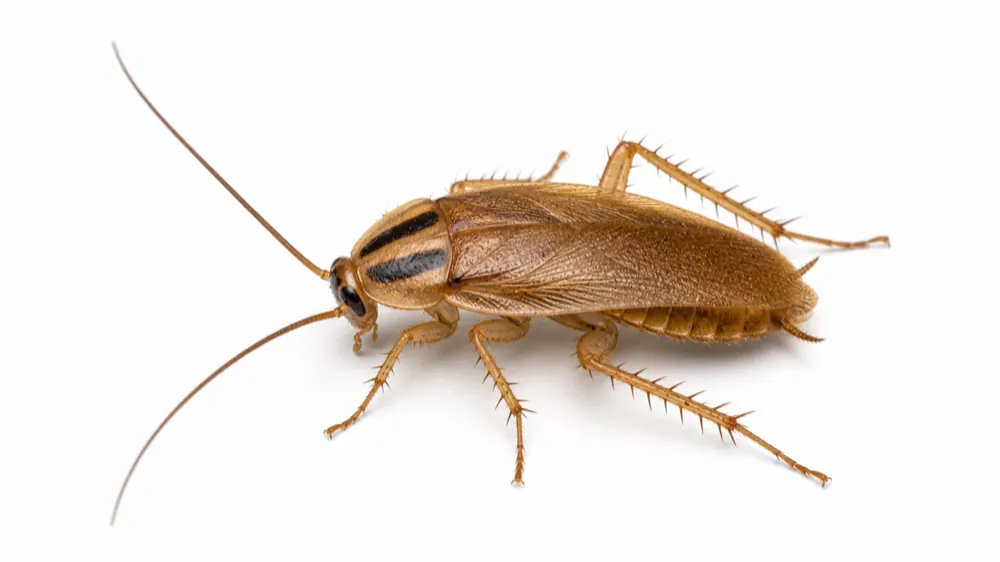
- Small indoor roaches in kitchens or bathrooms point toward German cockroaches.
- Wood roaches are more tied to logs, firewood, leaf litter, and wooded lots.
Lookalike Comparison
Lookalikes to compare with Smokybrown Cockroach.
Species changes the service plan, especially when kitchen, bath, drain, or exterior pressure is involved.
Biology And Behavior
Smokybrown cockroach pressure is exterior humidity plus access.
Smokybrown cockroaches do best where shade, moisture, organic debris, and protected voids line up. A good inspection should look up as well as down: gutters, soffits, attics, trees, roof edges, mulch, and crawl spaces can all explain sightings.
Specimen ReferenceSmokybrown CockroachPeriplaneta fuliginosa
High humidity and shelter are central to survival.
Adults can move to lights, upper stories, and roofline gaps.
Many indoor sightings trace back to exterior habitat rather than indoor breeding.
Nesting, Habitat, And Food
Where Smokybrown Cockroach activity usually starts.
Clogged gutters, roof leaks, and soffit gaps can support activity.
Tree holes, leaf litter, mulch, and wood piles create humid shelter.
Protected humid voids can keep roaches close to living areas.
Seasonal Activity
When Smokybrown Cockroach pressure is most visible locally.
Smokybrown cockroaches are most noticeable during warm, humid Cincinnati weather, especially around exterior lights and roofline or landscape harborage.
Activity WindowMar through Oct
JanFebMarAprMayJunJulAugSepOctNovDec
Control Logic
How a technician reads Smokybrown Cockroach activity.
Good smokybrown control starts outdoors: reduce moisture and organic debris, clean gutters, trim vegetation, seal upper and lower entry points, and treat humid harborage where activity is confirmed.
Confirm the roach before choosing treatment.
- Track where Smokybrown Cockroach is appearing before treatment.
- Reduce moisture, clutter, food access, or exterior harborage where possible.
- Avoid heavy DIY spray use when identification is uncertain.
- Use the service page or quote form when activity repeats or spreads.
Why roach species changes the whole service path.
- Confirm the Smokybrown Cockroach identification before choosing products or methods.
- Inspect Mulch, rooflines, gutters and surrounding entry routes.
- Match the treatment plan to the source condition, not just visible activity.
- Document recommendations so prevention steps are clear after service.
Keep Comparing
Profiles to compare with Smokybrown Cockroach.
Sources & Further Reading
Smokybrown Cockroach references used for this profile.
These references help separate indoor breeders, drain-associated roaches, and exterior invaders.
Reference 01Texas A&M Urban Entomology
Smokybrown cockroach characteristics, humidity needs, and habitat reference.
Reference 02University of Georgia IPMCockroach species overview including smokybrown cockroach field marks.
Reference 03Texas A&M AgriLife ExtensionCockroach IPM guide with smokybrown habitat and development notes.
Reference 04University of Nebraska ExtensionCockroach identification and integrated management manual.
Need Confirmation?
Need help confirming Smokybrown Cockroach?
Room location, size, color, and whether activity repeats at night usually point the inspection in the right direction.