
Spiders Field Profile
Brown Recluse
Loxosceles reclusa
Order Araneae / Family Sicariidae / Genus Loxosceles
Brown recluse spiders are medically important, but they are also one of the most overcalled spiders in homes. A good identification has to prove the spider, not the fear: six eyes in three pairs, plain legs, a uniform abdomen, recluse behavior, and a realistic range or transport story.
Field ID Snapshot
Brown Recluse identification starts with body shape and web pattern.
Use the eye pattern and body pattern before the violin mark. The violin can be faint, distorted, or mimicked by other brown spiders, while six eyes in three pairs is the stronger field character.
Most spiders have eight eyes, so the six-eye pattern is one of the best confirmation traits.
A dark mark on the cephalothorax can support the ID, but should not be used alone.
Brown recluse legs are not banded, spiny, or heavily patterned.
A patterned or chevron-marked abdomen points toward another spider.
They hide in undisturbed storage, boxes, clothing, closets, and wall voids rather than building capture webs.
Confirmed specimens deserve caution, but many suspected bites and sightings are not recluse-related.
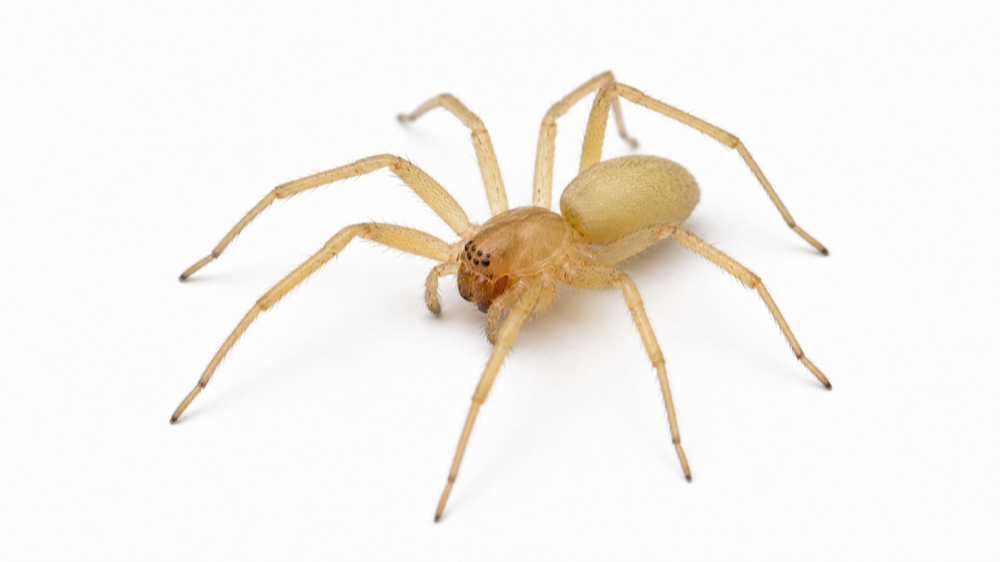
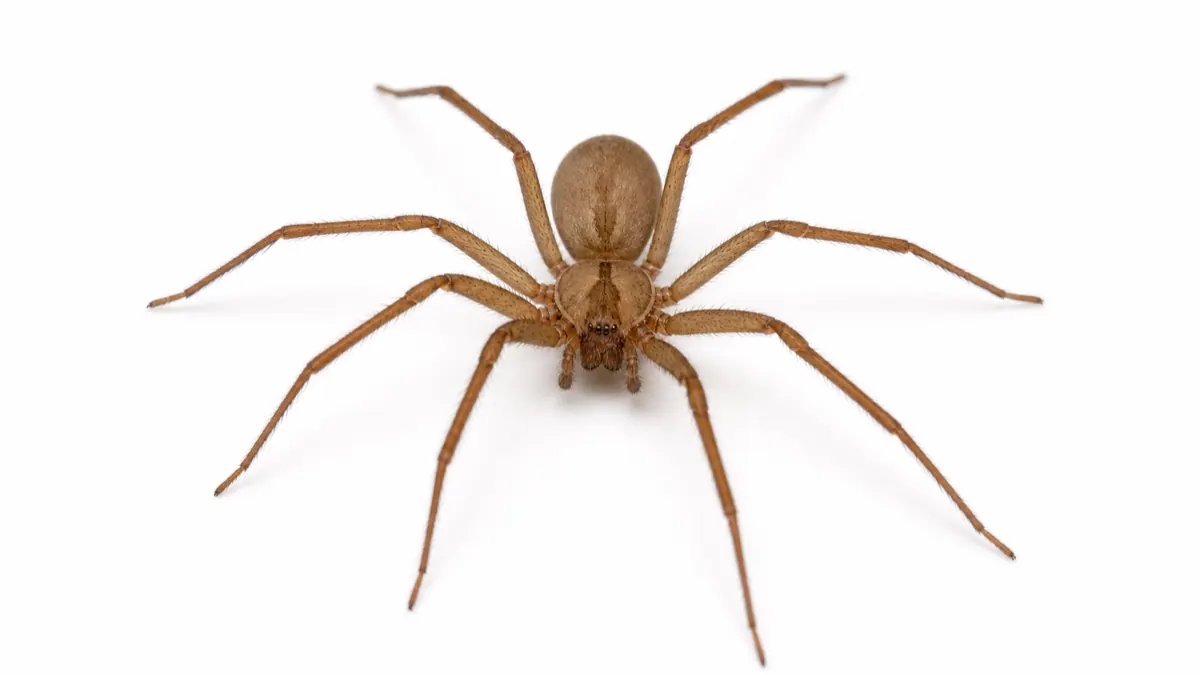 Macro view
Macro viewStart with the actual specimen.
Use the macro photo to slow the identification down: body shape, proportions, color pattern, and visible structures should match before the location clues are weighed.
Field evidenceField evidenceThen match the source pattern.
The strongest ID pairs six eyes in three pairs with a source that makes sense: closets, storage, boxes. Then compare against similar pests in the library; a better match should shift the identification.
Clues that make brown recluse more likely.
- A brown spider with six eyes arranged in three pairs, plain legs, and a plain abdomen.
- Repeated captures in glue boards, boxes, closets, basements, storage rooms, or other undisturbed areas.
- A violin-shaped mark that agrees with the eye pattern and body traits.
- A realistic Ohio/Midwest range or transport context rather than a single vague brown-spider sighting.
Clues that point away from brown recluse.
- Striped legs, spotted abdomens, or chevron patterns point away from brown recluse.
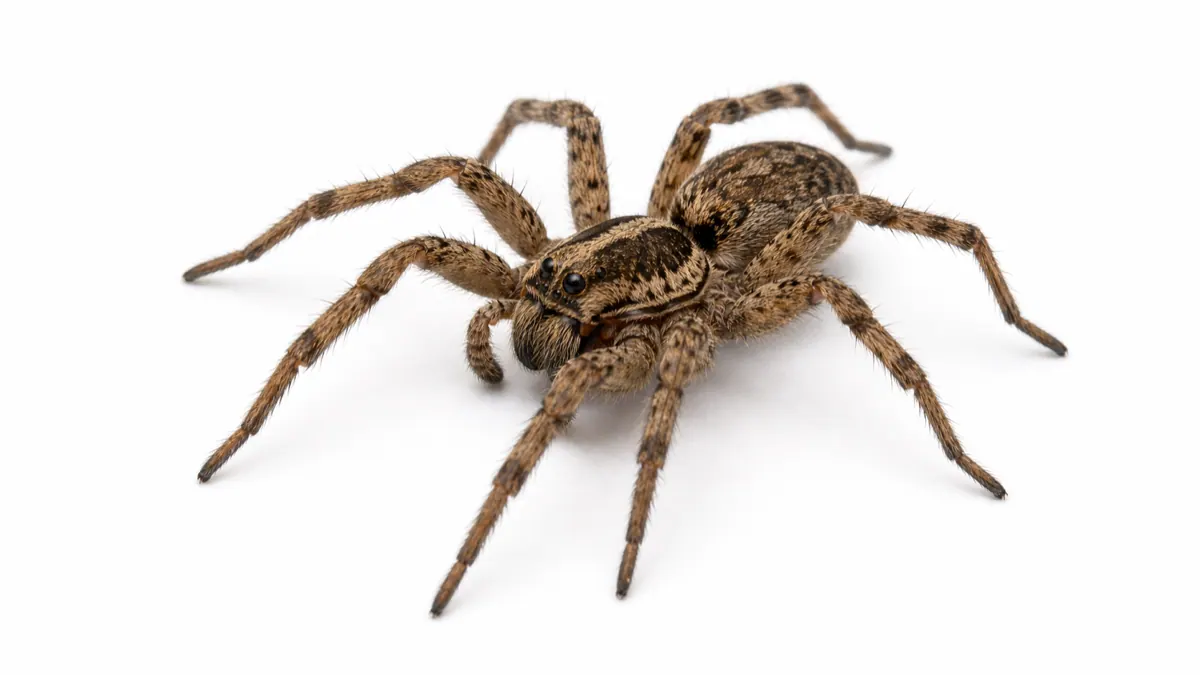
- Fast floor-running spiders with obvious leg banding are often wolf spiders, grass spiders, or funnel weavers.
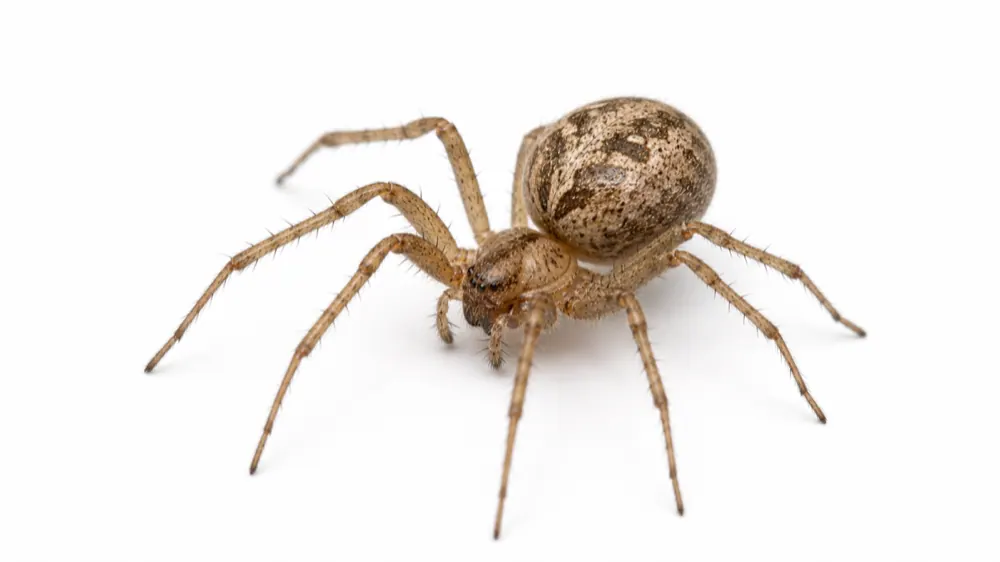
- Messy corner webs or egg sacs near windows point more toward common house spiders.
- A skin lesion alone does not confirm brown recluse without a verified spider.
Lookalike Comparison
Lookalikes to compare with Brown Recluse.
Web location, hunting behavior, markings, and size matter before deciding how serious the sighting is.
Biology And Behavior
Brown recluse education is mostly about careful confirmation.
Brown recluse spiders are nocturnal hunters that spend daylight in protected retreats. In homes, the practical risk comes from contact in stored clothing, bedding, boxes, shoes, or cluttered areas where a hidden spider is pressed against skin.
Specimen ReferenceBrown RecluseLoxosceles reclusa
They do not rely on a classic capture web; they move at night and retreat during the day.
Brown recluse can persist in sheltered places and tolerate long periods with little food.
Management and medical concern should be tied to a confirmed spider whenever possible.
Nesting, Habitat, And Food
Where Brown Recluse activity usually starts.
Closets, boxes, folded clothing, attics, basements, and stored paper are high-value inspection zones.
Rocks, bark, sheds, garages, and stored materials can support activity in suitable areas.
Multiple captures over time tell a better story than one suspected spider.
Seasonal Activity
When Brown Recluse pressure is most visible locally.
Brown recluse can be found indoors year-round where populations are established, with movement often noticed during warm months or when stored items are disturbed.
Activity WindowYear-round
JanFebMarAprMayJunJulAugSepOctNovDec
Control Logic
How a technician reads Brown Recluse activity.
Good brown recluse work starts with specimen-level confirmation, clutter reduction, monitoring, exclusion, and targeted treatment of harborage rather than broad visible-spider spraying.
Start with the web, room, and body shape.
- Save the spider if possible and take close photos from above and the front.
- Shake out stored clothing, gloves, shoes, bedding, and items from basements or closets.
- Reduce cardboard clutter and move stored items into sealed plastic containers.
- Use sticky monitors along quiet wall edges to learn whether sightings are isolated or repeated.
Why spider control starts with the insects they eat.
- Confirm the eye pattern and rule out common brown spider lookalikes.
- Map captures across storage zones, utility rooms, basements, and closets.
- Target cracks, voids, and harborage after source areas are cleaned and accessible.
- Recheck monitors so control is judged by captures, not just absence of visible spiders.
Keep Comparing
Profiles to compare with Brown Recluse.
Sources & Further Reading
Brown Recluse references used for this profile.
These references help verify spider markings, behavior, range, and homeowner risk clues.
Reference 01Penn State Extension
Brown recluse identification, range, lookalikes, and medical-context reference.
Reference 02University of Kentucky EntomologyBrown recluse biology, habits, and practical control background.
Reference 03Virginia Cooperative ExtensionBrown recluse identification and specimen-submission context.
Reference 04Colorado State University ExtensionRecluse range and misidentification context.
Need Confirmation?
Need help confirming Brown Recluse?
Send the location, size, and a clear photo if you have one. Identification matters before anyone treats.