
Spiders Field Profile
Wolf Spider
Lycosidae
Order Araneae / Family Lycosidae
Wolf spiders are active ground hunters, not web-building house spiders. Their size and speed make them alarming, but the field story is usually exterior habitat, prey insects, and seasonal wandering into garages, basements, and lower levels.
Field ID Snapshot
Wolf Spider identification starts with body shape and web pattern.
Confirm wolf spiders by looking for the hunting pattern: large forward-facing eyes, robust legs, no capture web, and floor-level movement. Females carrying egg sacs or spiderlings are especially distinctive.
The eye arrangement gives wolf spiders a different face than cobweb and funnel-web spiders.
They chase prey instead of waiting in a web.
Webs in corners or funnels point toward other spider families.
Females may carry egg sacs on spinnerets and spiderlings on the back.
Many are brown, gray, or patterned, which helps them blend with soil and leaf litter.
Indoor sightings often happen at ground level in garages, basements, and door edges.
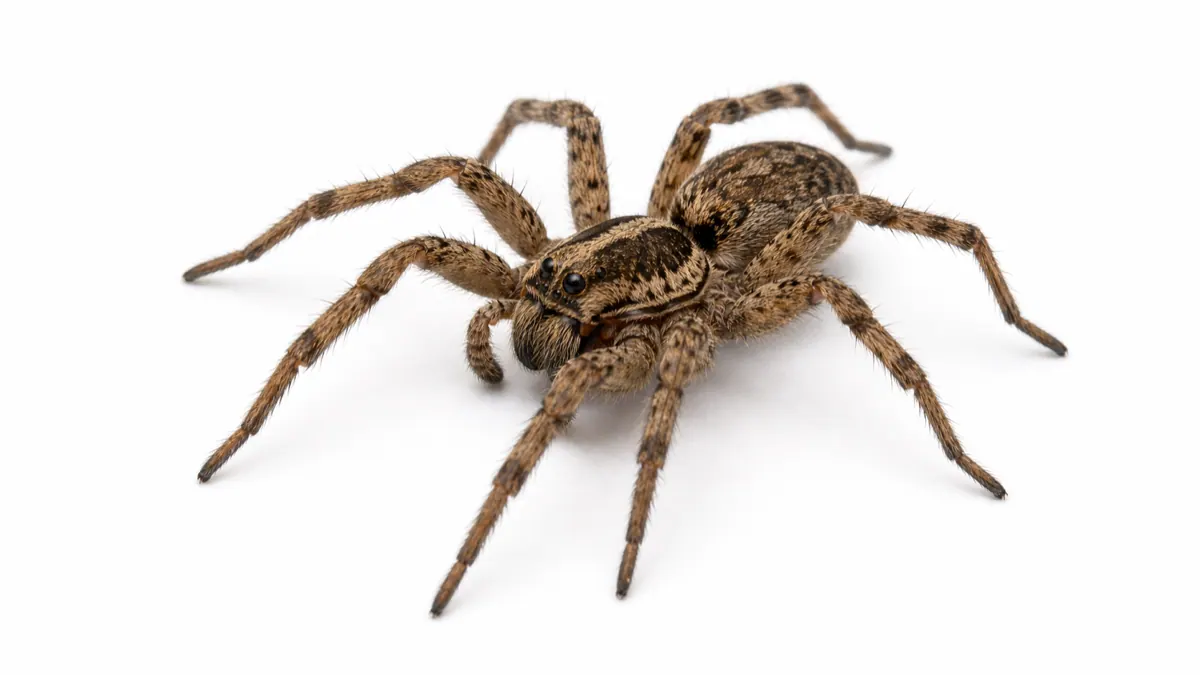 Macro view
Macro viewStart with the actual specimen.
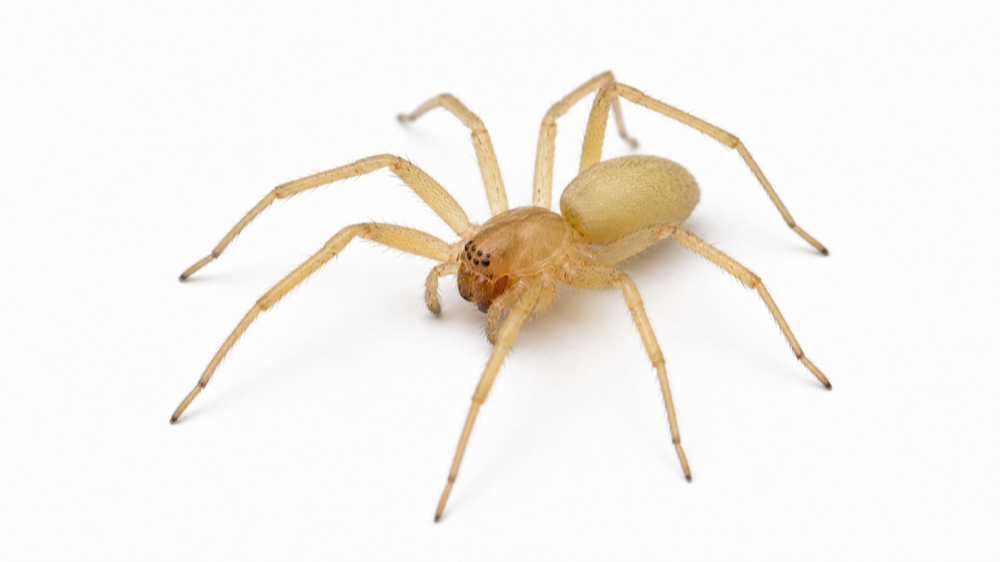
Use the macro photo to slow the identification down: body shape, proportions, color pattern, and visible structures should match before the location clues are weighed.
Field evidenceField evidenceThen match the source pattern.
The strongest ID pairs large front-facing eyes with a source that makes sense: garages, basements, ground level. Then compare against similar pests in the library; a better match should shift the identification.
Clues that make wolf spider more likely.
- A robust brown or gray spider running on floors, garage edges, or basement walls.
- No capture web where the spider was found.
- Large eyes visible from the front, especially in close photos.
- A female carrying an egg sac or young on her back.
Clues that point away from wolf spider.
- A funnel-shaped sheet web in grass or foundation plantings points toward grass spiders.
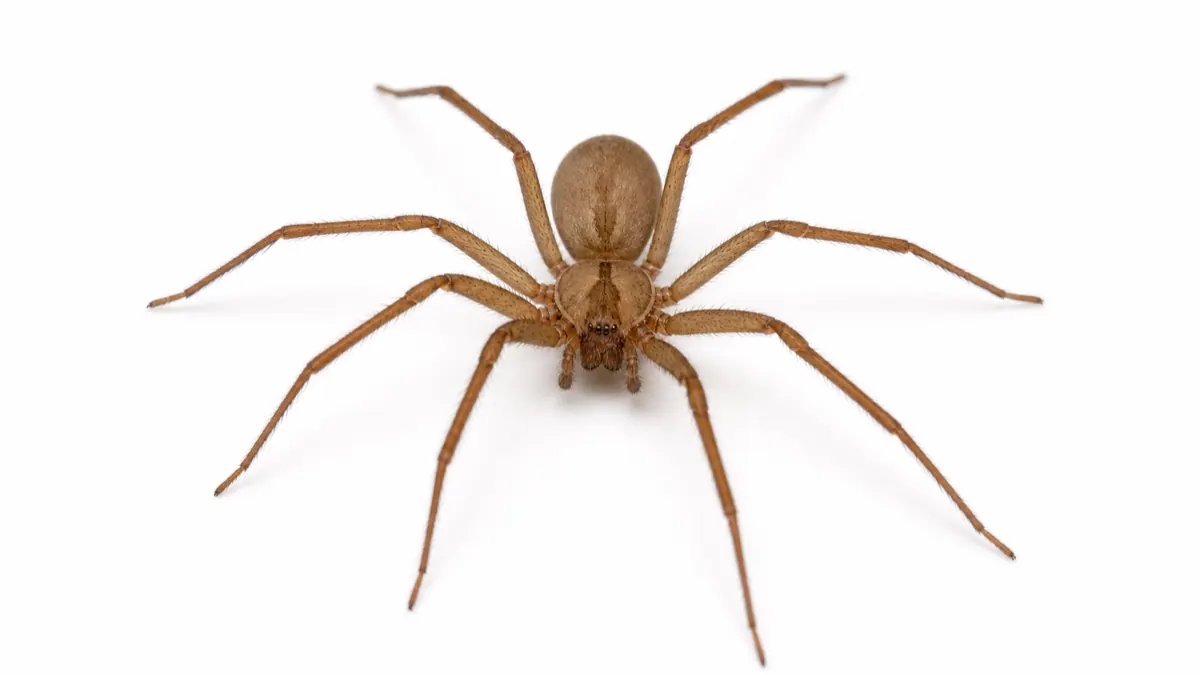
- Six eyes, plain legs, and undisturbed storage captures should be checked as brown recluse.
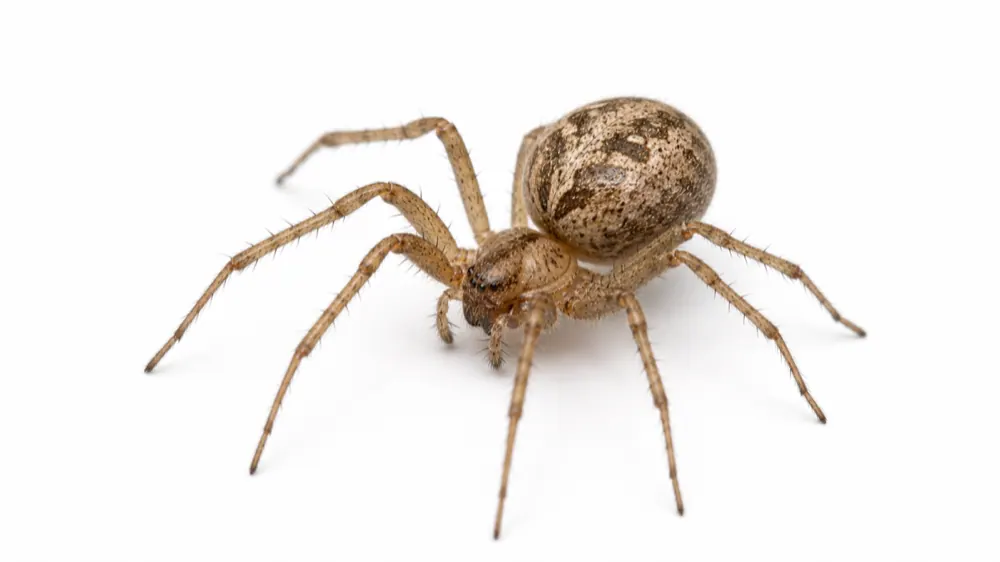
- Messy corner webs and rounded abdomens point toward common house spiders.
- Compact daytime hunters that jump and face the viewer may be jumping spiders.
Lookalike Comparison
Lookalikes to compare with Wolf Spider.
Web location, hunting behavior, markings, and size matter before deciding how serious the sighting is.
Biology And Behavior
Wolf spider pressure follows prey and ground-level shelter.
Wolf spiders live as solitary hunters in turf, mulch, ornamental beds, stones, leaf litter, and foundation shelter. When they appear indoors, it often reflects nearby outdoor habitat or seasonal movement rather than an indoor breeding source.
Specimen ReferenceWolf SpiderLycosidae
They feed on insects and other small arthropods.
Females attach egg sacs to spinnerets and later carry spiderlings.
Most indoor activity is wandering from exterior habitat.
Nesting, Habitat, And Food
Where Wolf Spider activity usually starts.
Landscape beds, leaf litter, woodpiles, and objects on soil are common shelter.
Lower-level gaps, worn door sweeps, and garage thresholds explain many sightings.
They are usually seen moving, not sitting in webs.
Seasonal Activity
When Wolf Spider pressure is most visible locally.
Wolf spiders are most visible from spring through fall in Cincinnati, with indoor sightings increasing when outdoor temperatures shift and ground-level spiders wander toward shelter.
Activity WindowMar through Sep
JanFebMarAprMayJunJulAugSepOctNovDec
Control Logic
How a technician reads Wolf Spider activity.
Good wolf spider work is habitat and entry focused: reduce exterior shelter, seal lower gaps, manage prey insects, and use monitors indoors.
Start with the web, room, and body shape.
- Track where Wolf Spider is appearing before treatment.
- Reduce moisture, clutter, food access, or exterior harborage where possible.
- Avoid heavy DIY spray use when identification is uncertain.
- Use the service page or quote form when activity repeats or spreads.
Why spider control starts with the insects they eat.
- Confirm the Wolf Spider identification before choosing products or methods.
- Inspect Garages, basements, ground level and surrounding entry routes.
- Match the treatment plan to the source condition, not just visible activity.
- Document recommendations so prevention steps are clear after service.
Keep Comparing
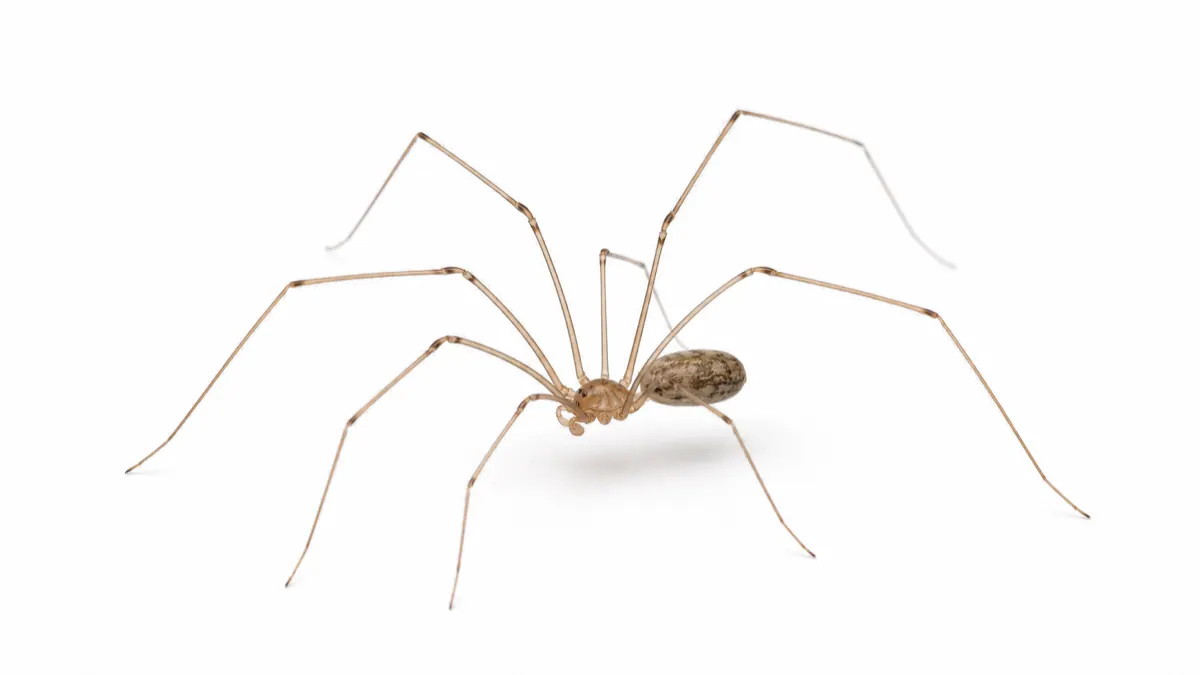
Profiles to compare with Wolf Spider.
Sources & Further Reading
Wolf Spider references used for this profile.
These references help verify spider markings, behavior, range, and homeowner risk clues.
Reference 01Utah State University Extension
Wolf spider identification, nesting habits, and nuisance context.
Reference 02University of Minnesota ExtensionSpider biology, hunting versus web-building behavior, and common household spider comparison.
Reference 03Colorado State University ExtensionHome spider biology, control, and household-entry patterns.
Reference 04University of Delaware Cooperative ExtensionWolf spider and household spider comparison reference.
Need Confirmation?
Need help confirming Wolf Spider?
Send the location, size, and a clear photo if you have one. Identification matters before anyone treats.