
Spiders Field Profile
Grass Spider
Agelenopsis spp.
Order Araneae / Family Agelenidae / Genus Agelenopsis
Grass spiders are funnel-web builders common in lawns, ground cover, shrubs, foundations, and exterior edges. Homeowners often notice the flat sheet web first, then see fast spiders running indoors in late summer or fall.
Field ID Snapshot
Grass Spider identification starts with body shape and web pattern.
Confirm grass spiders by the horizontal sheet web with an off-center funnel retreat, fast movement, and long spinnerets. They are often mistaken for wolf spiders or brown recluse.
The web is usually a flat sheet with a tunnel retreat where the spider hides.
The rear spinnerets are often noticeable on close inspection.
They dash across webs or floors when disturbed.
Lawns, shrubs, ivy, ground cover, and foundation edges are common.
Indoor wandering often increases as outdoor temperatures change.
They are beneficial predators and not considered medically important.
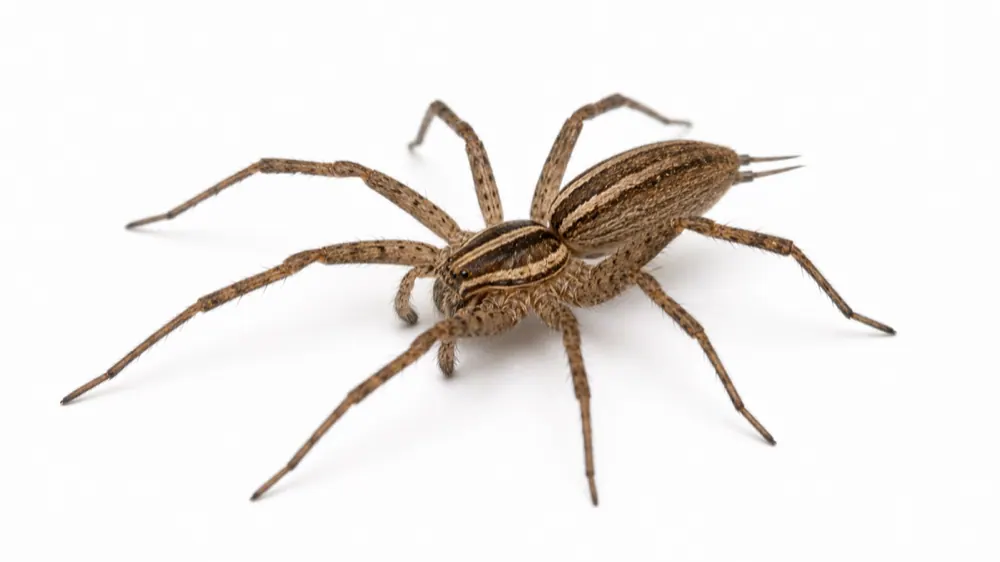 Macro view
Macro viewStart with the actual specimen.
Use the macro photo to slow the identification down: body shape, proportions, color pattern, and visible structures should match before the location clues are weighed.
Field evidenceField evidenceThen match the source pattern.
The strongest ID pairs sheet web with funnel with a source that makes sense: lawns, shrubs, foundation edges. Then compare against similar pests in the library; a better match should shift the identification.
Clues that make grass spider more likely.
- Flat horizontal sheet web with a funnel or tunnel retreat.
- Webs in grass, ivy, shrubs, brush piles, foundation edges, or exterior corners.
- Fast brown spider running from the funnel when the web is disturbed.
- Indoor sightings in late summer or fall after exterior web activity.
Clues that point away from grass spider.
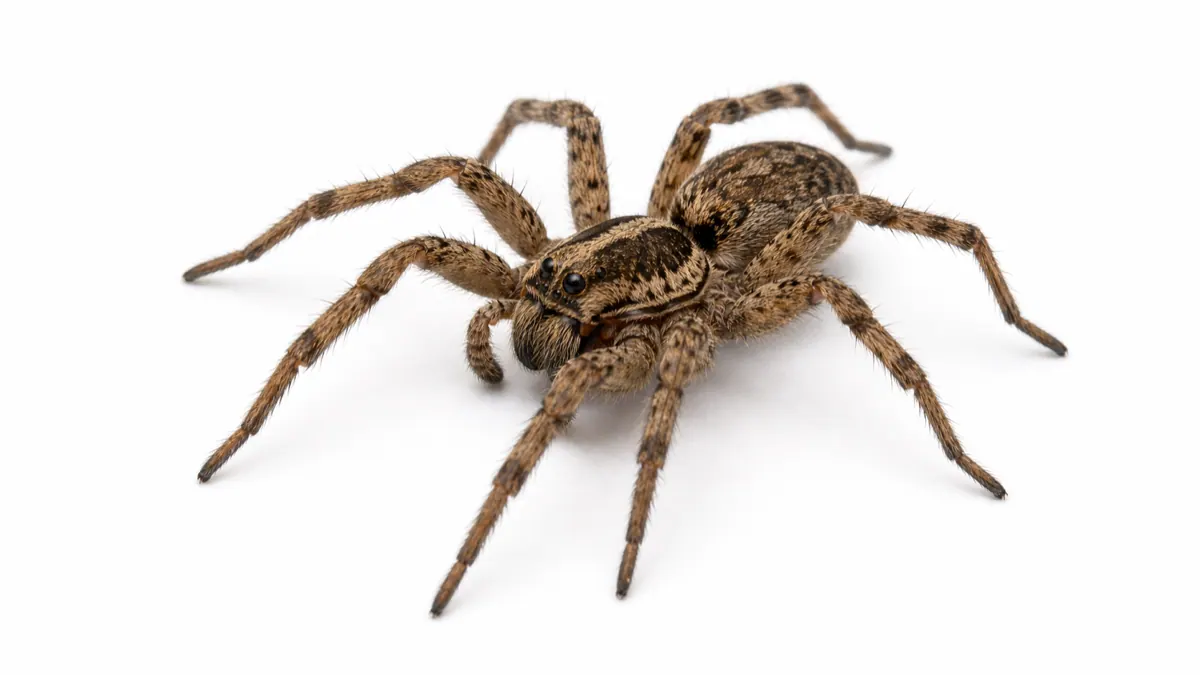
- A running spider with no funnel web may be a wolf spider.
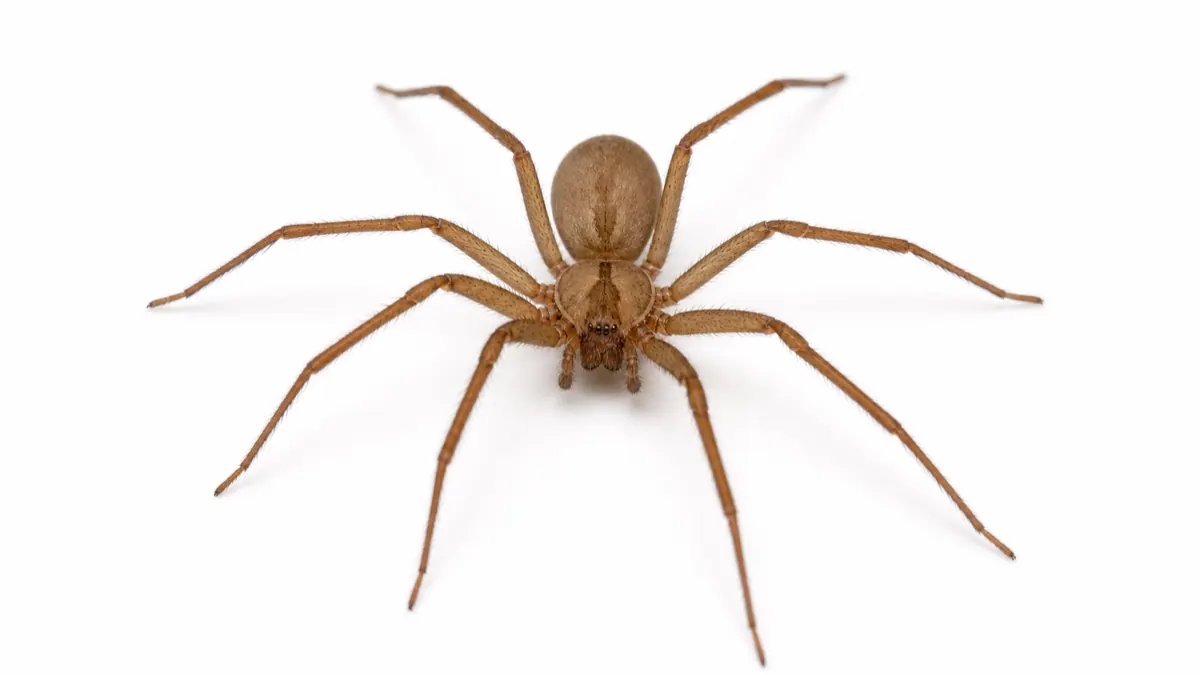
- Six eyes, plain legs, and storage-area captures should be checked as brown recluse.
- Circular wheel-shaped webs point toward orb-weavers.
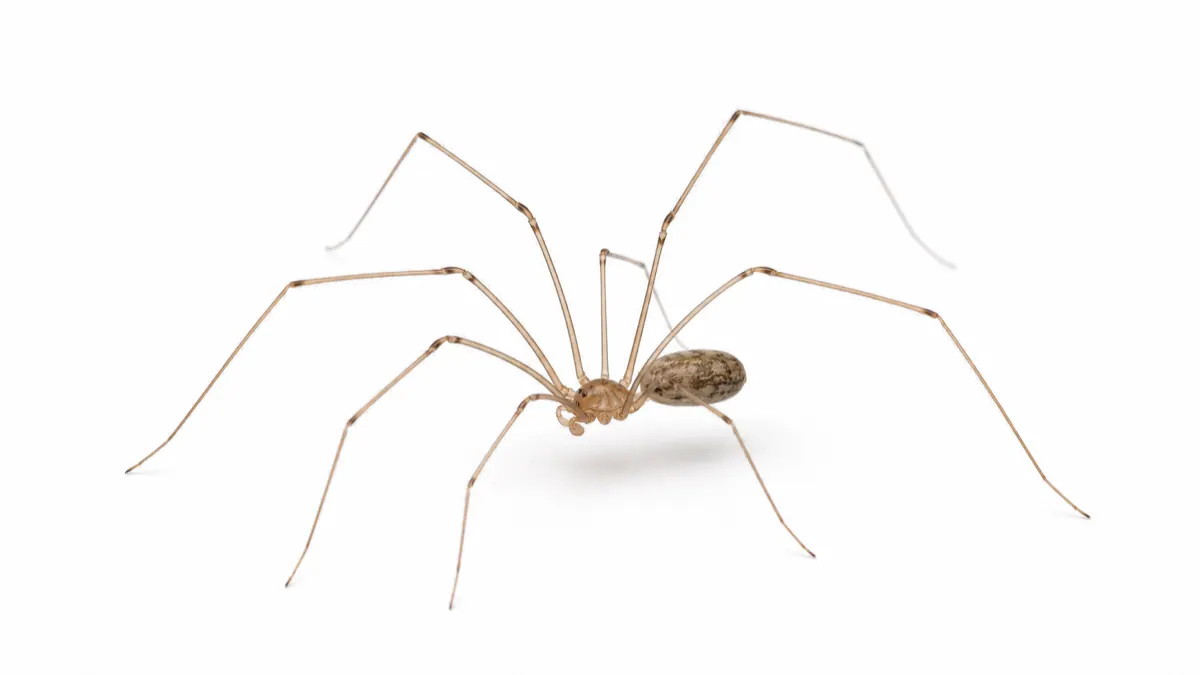
- Messy indoor corner webs point toward house spiders or cellar spiders.
Lookalike Comparison
Lookalikes to compare with Grass Spider.
Web location, hunting behavior, markings, and size matter before deciding how serious the sighting is.
Biology And Behavior
Grass spider pressure starts outside in funnel-web habitat.
Grass spiders build a sheet of silk with a retreat tunnel. Insects that hit the sheet are chased down quickly, which is why these spiders are fast and why the web location tells the inspection story.
Specimen ReferenceGrass SpiderAgelenopsis spp.
The tunnel gives the spider a protected place to wait and escape.
Webs form where small insects move through turf and vegetation.
Indoor activity often reflects exterior webs and fall movement.
Nesting, Habitat, And Food
Where Grass Spider activity usually starts.
Look for sheet webs in morning dew across grass, ivy, and low plants.
Webs near the same wall line can explain indoor floor sightings.
Spiders may be found running across floors or trapped in tubs and sinks.
Seasonal Activity
When Grass Spider pressure is most visible locally.
Grass spiders are most noticeable in Cincinnati from late summer into fall, when mature spiders and exterior funnel webs become obvious.
Activity WindowApr through Oct
JanFebMarAprMayJunJulAugSepOctNovDec
Control Logic
How a technician reads Grass Spider activity.
Good grass spider management focuses outside: remove excess webbing near entries, trim dense ground cover, reduce prey insects, seal lower entry gaps, and monitor indoor wanderers.
Start with the web, room, and body shape.
- Track where Grass Spider is appearing before treatment.
- Reduce moisture, clutter, food access, or exterior harborage where possible.
- Avoid heavy DIY spray use when identification is uncertain.
- Use the service page or quote form when activity repeats or spreads.
Why spider control starts with the insects they eat.
- Confirm the Grass Spider identification before choosing products or methods.
- Inspect Lawns, shrubs, foundation edges and surrounding entry routes.
- Match the treatment plan to the source condition, not just visible activity.
- Document recommendations so prevention steps are clear after service.
Keep Comparing
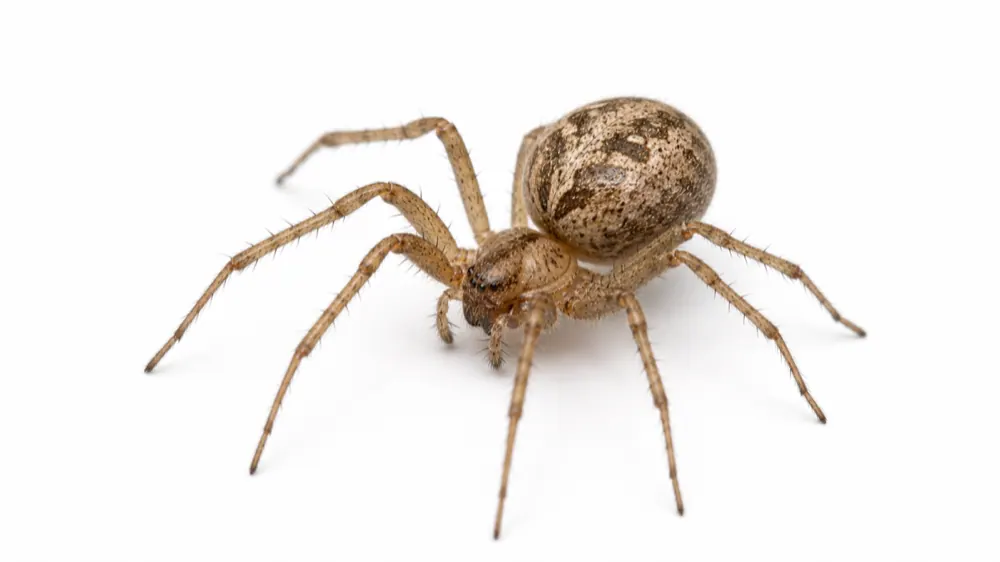
Profiles to compare with Grass Spider.
Sources & Further Reading
Grass Spider references used for this profile.
These references help verify spider markings, behavior, range, and homeowner risk clues.
Reference 01Penn State Extension
Grass spider web structure, habitat, and autumn indoor movement.
Reference 02Utah State University ExtensionFunnel-web spider identification and grass spider comparison context.
Reference 03Colorado State University ExtensionFunnel weaver identification, lookalikes, and home control guidance.
Reference 04University of Minnesota ExtensionFunnel weaver and common household spider comparison.
Need Confirmation?
Need help confirming Grass Spider?
Send the location, size, and a clear photo if you have one. Identification matters before anyone treats.